Posts

How is teaching through literacy different from "traditional" foreign language teaching?

Image
Since this blog was "silent" for a long time, and I am hoping that it will attract new readers, I thought it would be a good idea to start with explaining what makes teaching through literacy special. As part of a project we did in collaboration with the British Council Spain , we created some videos about the Literacy Approach and how it plays out in primary English as a foreign language  classes. What is said in the videos can be applied to other educational stages too, but the examples provided are more suitable for primary education. And, of course, what is said about teaching English is also applicable to other foreign languages. In the first video, I explain what makes literacy-based teaching different: These ideas are developed in other videos, already uploaded on YouTube, and written material that is not yet available online, but which I will share as soon as it is.

A glimpse of what we know about the effect of the Literacy Approach

Image
In my previous entry I claimed that the Literacy Approach could contribute to improving students’ reading skills which, as we know from the PISA results, is more than necessary. How do I know that this way of teaching can have a positive effect? A few years ago, I was lucky enough to be able to work very closely with a charter school in a village in the north of Madrid where teachers received training in using the Literacy Approach. We were also able to collect data about different aspects during a full academic year, among them students’ reading scores on a past version of the PIRLS test. These students were in the 5 th and 6 th grade of primary education, and they took the standardized PIRLS test normally taken by 4 th graders in their mother tongue, but in the foreign language (English). Here is what we found: 1.       Students’ mean result in the foreign language was higher than the mean result obtained by students in the official PIRLS test taken in ...

I am back!

After almost four years of silence I have decided to re-take the blog. Why? First of all, because I am currently involved in a lot of teacher-training on literacy teaching and this gives me the necessary contact with practitioners to be able to write something that is likely to be relevant to them. I talk with teachers, hear their questions, see where they struggle with the approach, and all of this will hopefully give me enough ideas for the blog. As always, I will also be grateful for your comments and questions, since they too help me make the content of the blog relevant. The second reason is that over the past few years I was lucky to collaborate with the British Council Spain, and together we have been able to create some materials that I would like to share with you through this blog. And finally, PISA 2025... Reading scores are falling in most countries. Explanations include more screen time, less reading for pleasure and shorter attention spans, though the OECD itself st...

Using the Literacy Approach with very young students

Image
The Literacy Approach has, so far, been mostly implemented and tried out in primary school, starting in year 3 when students are transitioning from learning to read into reading to learn. However, in many contexts, schools would like to use the Approach with younger students in grades 1 or 2, and ask if and how this can be done.  While I still think that the Approach requires a certain maturity, I have seen students in the 2nd grade working on a unit on tongue twisters, where they identified the way tounge twisters work by using a number of sounds repeatedly, and then created their own. However, this was a school where students were immersed into English from infant education onwards, and therefore had a high level in the language. In more "normal" contexts, I could imagine students working on one of the stories that are characterized by repetition, for example the very basic  Brown bear, brown bear  by Eric Carle  or Pete the cat: I love my white shoes by Eric Litw...

What can you teach here?

Image
The other day I was working with some English teachers. They had done good work in choosing their texts, all except for the group of teachers designing a unit for primary year 4, who wanted to work on a story but simply couldn't make up their minds about which text to use as a model. My co-trainer, Eva, suggested they should use a story called " The incredible bookeating boy ". The teachers just loved it, but when it came to selecting the teaching points they were not very sure what to do... If you read the story, you will probably find that it is written in the past tense, it uses some temporal linkers and it illustrates the use of combinatons of verb + infinitive or verb + -ing. But this is the same we would be doing in a traditional  English lessons, where texts are models of language only. However, in the Literacy Approach , the focus is on the text, on how the text is constructed and why it works so well. And in this case, the book illustrates the story arc to perfec...

Formative assessment or checkpoints

Image
In the last blog entry the focus was on the learning path and how we as teachers need to support our students' progress along the path. However, with the large classes we normally teach it is often simply not possible for the teacher to know where exactly the students are and what they are still struggling with. This is where formative assessment comes in. In the words of some teachers who participated in one of my last courses, we need to build some checkpoints into the learning path to make sure students have understood and are able to do certain things. After all, the learning path should put the building blocks of a certain text type at students' disposal, so that they can then build their own texts, and it is therefore important to give them enough time and opportunity to get familiar with these bulding blocks. But what does formative assessment look like? Rather than explaining it myself, I am going to refer you to this very informative blog entry from Edutopia.  Format...

The Learning Path

Image
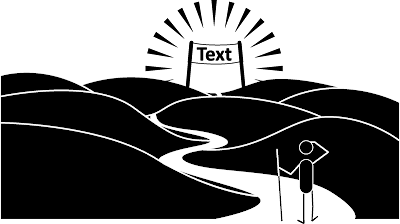
In one of the first entries we talked about backward planning  as one of the key principles in the approach. In this entry I'd like to talk about the learning path. Backward planning means that my first thought in the process of planning a lesson is about what I would like to achieve with my students, or what my students will have to produce at the end of the unit. To further clarify my expectations, I ask myself about the characteristics of this production, what it should look like, and what my students can be expected to achieve in the unit. This is what goes into the "level expected" column on the first page of the planning grid. This process is essential, as it will give me - and my students - a clear sense of direction, and everything we do in class will help them achieve this final production.   However, so far this is no more than an aim, and my students are not able to reach it by themselves - they need to reflect on the characteristics of the text they have to pr...

Using the Literacy Approach with university students: a personal observation

Image
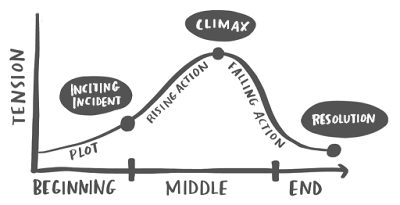
This week, rather than talking about the Approach as such, I'd like to share with you something that happened a few days ago in my classes at university. On Monday I asked the students to think about a frightening experience they had had, and eager as they are as first-year students, and seeing that writing about a frightening experience was their first task, by our next class on Wednesday some of them had already uploaded their assignments for me to correct. We spent the whole two-hour session working on stories, distinguishing between stories and reports, talking about plots, looking at plot diagrams, and correcting a story written by a former student. At the end of the session the students confessed that they had already uploaded their stories and asked me if they would be able to delete them. When I told them I would have to do so for them they were dismayed and begged me "not to look at them"! For me this was the best feedback I could have wished for. The students ha...

Production phase for Florence Nightingale

Image
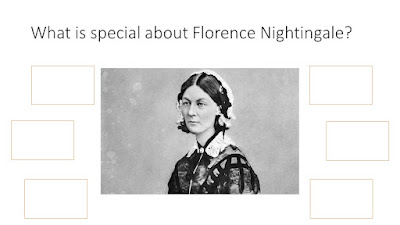
 After a long and restful summer break (the heat made it a rather challenging summer!), I am back to complete the work on the unit about Florence Nightingale and biography writing. You will remember that we already looked at the reception phase, so now it's the turn of the production phase  divided into a guided production phase, where students have the possibility of doing more controlled practice on some aspects of the text, and a free production phase, where they acually write the biography. I must admit that while the structure is very clear for me, I tend to take it for granted that students will be able to write good texts once we have worked on their characteristics. I  have to make a conscious effort to allow enough time for their guided practice, and if I don't, the result is often disappointing. In the unit designed for the Florence Nightingale text, the focus is on three different features of the model text: the need to include factual and specific information,...

The second part of the planning grid (II)

Image
On to the last part of the planning grid now, which focuses on students' production. Through the reception phase , students have been able to enjoy a model text, talk about its content and become familar with its characteristics. The features dealt with can be structural (how ideas are organized), stylistic (how a certain effect is created), linguistic (vocabulary, pronunciation, etc.), and so on. By dealing with these features we are preparing students for their own production. This does not mean, however, that they will be able to speak, write or record straight away. Rather, students will still need some "safe space" to practise the stylistic strategies, use the linguistic elements, put the different parts of a text in the right order, etc. And this is what is done in the guided production stage. Teachers working with this approach sometimes complain that students depend on them too much for their production, and I often wonder to what extent this could be due to a lac...

The example of the planning grid continued: Reception Phase for Florence Nightingale

Image
 To llustrate what was said in the last blog entry , I have filled in the Reception Phase in the plannig grid for the unit on Florence Nightingale. As we said in this last entry, the work on the text type biography  starts with some exercises that prepare students to read, understand and enjoy the text. In this case, since the text is somewhat specialized as it talks about nursing, I decided to do some vocabulary work to start with. The other possible source of difficulty our students may have is related to the relevance of Florence Nightingale as one of the few upper-class women in the 19th century to be able to work. Without an awareness of how unusal this situaton was 200 years ago, most students will probably not fully understand the relevance of the person we are dealing with in this unit - hence the next two taks in the teaching sequence. With the scene thus set for the students to be able to understand the text, we ask them to predict its content. This is a reading str...

The second part of the planning grid (I)

Image
I hope the last posts about the first part of the planning grid made sense to you, and promise the second part is much more straightforward 😉 This is because the "difficult part" is identfying the teaching points in a text and selecting the ones that are relevant for the particular group of students the unit is aimed at. The rest is more like the teaching we are used to - at least in principle. The second part of the planning grid is divided into two phases, reception and production. This division reflects the idea that, before students can be asked to produce a text they must understand how it works, and for this must have had the chance to enjoy and analyze a model text. This means that the first step is the reading / listening / viewing phase, which is appropriately introduced through a series of "pre-" exercises that present the topic and create a chance for students to activate their background knowledge. Most teachers will be familiar with this kind of exerc...

An example of the first part of the planning grid: Florence Nightingale

Image
As promised, in this blog entry I will share with you the first part of a planning grid for a unit on biographies, that takes the biography of Florence Nightingale as a starting point. You can see that the first three boxes in the planning grid contain basic information about the unit: who it was designed for, what kind of text we are working on and where to find the model text. If we look at the second box, it specifies the type of text we are working on, and then states that this "= General aim of the unit". What this means is that if we are working on a given text type, this is also the text type we are going to ask our students to produce. This working from a model text to a similar production may look a bit mechanic and uninteresting, but it is a crucial part of the Approach : only if my students have developed the necessary understanding of how a given text works and looked at some specific strategies the author uses, can they be expected to produce a text of this kin...

What is meant by "textual" and "linguistic" teaching points

Image
What does a foreign language teacher teach? The foreign language, right? Or maye not only. Maybe language teachers also need to deal with texts: how they are constructed, how to organize the ideas in a text to make it communicate what I want, how to link ideas... It should come as no surprise that the Literacy Approach is firmly based on the second view of language teaching. And because this is not what most foreign language teachers are trained to do, this "textual" aspect is the one that appears first in the teaching points section of the planning grid. The "textual" aspect is further divided into two elements, text features and text effect. The first one focuses more on the formal aspects of the texts, the ones that can be seen by watching the video, reading the text or listening to the podcast: the use of direct speech, the structure into paragraphs, the way the image and the words on the screen communicate together in a power-point presentation, etc. The secon...

The first part of the planning grid

Image
 As I said in an earlier blog entry , the planning process in the Literacy Approach starts from the back, with a decision about the kind of text I want my students to produce: a recipe, a description of a character from a book, an explanation of a natural phenomenon or a report of some kind. Then I have to narrow down my choice: will this recipe of mine be a written recipe or a video? Will it be addressed at children, novices or experts? Do I want the report to be a newspaper report of an important event, a radio report about a robbery or an informal report on a school outing for a school yearbook. All these decisions will have an impact on the characteristics of the text I would like my students to produce, and therefore on the teaching points of the unit.      To organize this information, the first part of the planning grid asks teachers to identify the type of text they are going to work on in the unit and provide some information about the students the unit is...

Radio interview about the Literacy Approach

Image
Since I have just received the link to the interview I did this morning on radio (in Spanish), I thought I might share it here:  https://cadenaser.com/audio/1654164271149/  Hope you enjoy it! (https://unsplash.com/es/fotos/yE5_bQNQgfU?utm_source=unsplash&utm_medium=referral&utm_content=creditShareLink) If you want to receive a notification when new posts are published, why not follow ?

The planning grid

Image
 I have already mentioned in some other blog entry that while developing this Approach to teaching English, I had the opportunity to participate in an Erasmus+ project about literacy teaching in the foreign language classroom. While designing the project, our coordinator Katarzyna Brzosko Barratt, suggested that we create a planning tool for teachers using this Appproach , and this turned out to be one of the most important outcomes of the project: the planning grid. The reason why I consider it so important is twofold: on the one hand, in my experience, most teachers do not really plan their teaching but rather rely on textbooks to do it for them. Of course, this does not mean that they follow the textbook unblinkingly, but most of their planning consists in deciding which textbooks activites to do and which to skip, or selecting tasks that can complement the textbook. And, let's be honest, teachers don't have a lot of time to plan each one of their lessons as they would ma...

Units for 5th primary

Image
During this academic year 21-22 I have been able to work with three schools in on-site PD seminars . The aim was to create some literacy units to be used with students of English and by doing so become more familiarized with the approach. One of the schools, Infanta Leonor, has already finished their work, which is now publicly available on the Internet:  Seminario Infanta Leonor Literacy Approach | Mediateca de EducaMadrid  The material consists of three units of work on different texts (Harry Potter, The Day the Crayons Quit and Romeo and Juliet), in which students are asked to create different types of texts: the description of a person they admire (video), a booktrailer (video) and a written newspaper report. The work done by this team of teachers is, frankly, quite amazing, and, apparently, their students are making great progress and enjoying this way of working. Looking at the units, I am really impressed by the choice of model text. For example, choosing the "Sorting H...

Backward plannning

Image
One of the main principles that shape the Literacy Approach is backward planning. Coined by Wiggins & McTighe (2005), I first heard about it from my colleague Oliver Meyer. What backward planning consists in is starting the planning of a unit of work from the end of the teaching unit. This means that my first thought when planning a literacy unit will be: what do I want my students to be able to do (or, in our case, produce) at the end of the unit? Will I want them to create a video tutorial for an arts and craft project, a poster explanation of a science experiment or a written description of students' favourite holiday-site? Depending on the kind of text I want them to be able to produce, and of the medium chosen for this production (visual, audiovisual, spoken or written), my students will need different skills, knowlegde and understandings. This means that, if I start my planning process with the end production rather than with the contents the syllabus - or, let's be h...