Posts

Showing posts with the label production

The Learning Path

Image
In one of the first entries we talked about backward planning  as one of the key principles in the approach. In this entry I'd like to talk about the learning path. Backward planning means that my first thought in the process of planning a lesson is about what I would like to achieve with my students, or what my students will have to produce at the end of the unit. To further clarify my expectations, I ask myself about the characteristics of this production, what it should look like, and what my students can be expected to achieve in the unit. This is what goes into the "level expected" column on the first page of the planning grid. This process is essential, as it will give me - and my students - a clear sense of direction, and everything we do in class will help them achieve this final production.   However, so far this is no more than an aim, and my students are not able to reach it by themselves - they need to reflect on the characteristics of the text they have to pr...
Backward plannning

Image
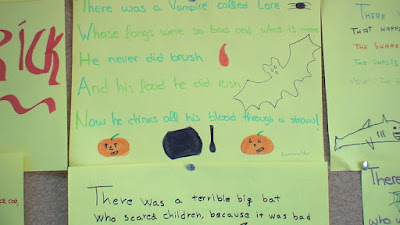
One of the main principles that shape the Literacy Approach is backward planning. Coined by Wiggins & McTighe (2005), I first heard about it from my colleague Oliver Meyer. What backward planning consists in is starting the planning of a unit of work from the end of the teaching unit. This means that my first thought when planning a literacy unit will be: what do I want my students to be able to do (or, in our case, produce) at the end of the unit? Will I want them to create a video tutorial for an arts and craft project, a poster explanation of a science experiment or a written description of students' favourite holiday-site? Depending on the kind of text I want them to be able to produce, and of the medium chosen for this production (visual, audiovisual, spoken or written), my students will need different skills, knowlegde and understandings. This means that, if I start my planning process with the end production rather than with the contents the syllabus - or, let's be h...